 The Role of Research, Data, and Insight in Modern PR Campaigns
  Practical Financial Management Strategies for Salaried Professionals and Businesses
  How Household Replacement Cycles Influence When to Use Fridge or Mobile EMI
  Mapping Success: How to Choose the Best Location for a Dispensary
  Diversified Investment Pathways: A Formal Look at the Integration of NSE IPO and SIP
  Open Your Demat Account Today to Invest in NSDL and Track Its Share Price
 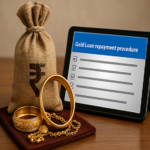 Documentation and Verification in Digital Gold Loan Applications
  Measuring ROI and Performance with Yext SEO
  Content Marketing Agency: Transforming Content Into Business Results
Modern PR is increasingly driven by more than announcements, press releases, and spokesperson quotes. Strong campaigns often begin with something a journalist can actually use: a new finding, a credible data point, or an expert interpretation of a wider trend. For a top PR firm, research and insight can provide the substance that turns a brand message into a story with genuine editorial value.
This does not mean every campaign needs a major survey or a complex report. Sometimes a small but well-chosen piece of data can be enough to create interest, particularly if it reveals something timely, unexpected, or relevant to a journalist’s audience.
Why Data Gives PR More Substance
Journalists are often looking for evidence.
A company may want to talk about changing customer behavior, but that argument is much stronger if it can show actual figures. A business may believe an industry is shifting in a particular direction, but a journalist is more likely to engage if there is research to support that claim.
Data gives PR something concrete to work with.
It can help move a story away from opinion and toward evidence, which makes it easier for journalists to assess whether the idea is worth covering. It can also give the campaign several different angles rather than relying on one broad message.
Read More: Mapping Success: How to Choose the Best Location for a Dispensary
For example, a national dataset may reveal an overall trend while also producing regional differences, age-group comparisons, or industry-specific findings. Each of those can become a separate media opportunity.
Original Research Can Create Something New
One of the biggest challenges in PR is finding something that has not already been said hundreds of times.
Original research can solve that problem.
A company might commission a survey, analyze its own anonymized customer data, or examine a public dataset in a new way. The objective is not simply to produce numbers, but to uncover something interesting enough to become a story.
The strongest findings often challenge assumptions or reveal a change that people may not have noticed yet.
A workplace business, for example, could examine how employee expectations are changing. A property company might analyze shifts in buyer behavior. A travel brand could study how vacation habits differ across regions.
The company does not need to make itself the center of the story. Its value comes from producing the information that allows the story to exist.
The Methodology Has to Hold Up
Good data can strengthen a campaign, but weak data can undermine it very quickly.
Journalists may ask where the figures came from, how many people were surveyed, when the research was carried out, or how a ranking was calculated. If the methodology is unclear, the story may lose credibility.
That means PR teams need to think carefully about how research is designed.
Read More: Organising Modern Workspaces with Plastic Storage Containers and
A small survey should not be presented as though it represents an entire population. Public datasets should be current and sourced properly. Comparisons should be fair, and calculations should be easy to explain.
This is especially important with rankings and indexes, which are popular in digital PR. If several factors are combined to produce a score, the weighting should make sense and should not appear to have been chosen simply to create a more dramatic headline.
Credibility matters more than novelty.
Data Still Needs Interpretation
Numbers on their own are rarely enough.
A journalist may be interested in the figure, but they will also want to know what it means.
This is where insight becomes important.
A strong PR campaign does not simply say that a percentage has risen or fallen. It explains why that may be happening and what the change could mean for customers, businesses, or the wider industry.
Expert commentary can add that context.
Someone inside the company may be able to explain the forces behind a trend, identify what is likely to happen next, or point out why the result matters.
That combination of data and interpretation is often much stronger than either one on its own.
Internal Data Can Be Especially Valuable
Businesses sometimes overlook information they already hold.
Customer searches, purchasing patterns, booking trends, product preferences, and usage data may all reveal changes that have wider relevance.
Used carefully and with appropriate privacy protections, internal data can give a company something genuinely distinctive to discuss because no other organization has exactly the same information.
This can be particularly effective when the data reflects current behavior rather than attitudes.
A survey tells a journalist what people say they do. Internal data may show what they actually did.
Of course, the information still needs context. A company’s own customer base may not represent the wider population, so claims should be framed accurately.
The advantage is uniqueness, not automatic authority.
Public Data Can Be Turned Into New Stories
Original research does not always require collecting new information.
Government bodies, regulators, universities, industry groups, and other organizations publish large amounts of public data. The PR opportunity can come from analyzing that information differently.
A dataset may be available nationally but never compared by city. Several separate sources may reveal something interesting when brought together. An older trend may become relevant again because of a new event or policy change.
This kind of analysis can be highly effective because the underlying data already comes from a credible source.
The PR team adds value by finding the story inside it.
That can also make the campaign easier for journalists to verify, which may increase confidence in using the findings.
Insight Does Not Have to Mean Statistics
Research-led PR is often associated with numbers, but insight can come from other sources too.
Expert knowledge is one example.
A specialist may be able to explain a complicated change in plain language, identify a developing trend before it becomes obvious, or provide practical advice around a news event.
Customer conversations can also reveal recurring concerns that deserve wider attention. Industry experience may highlight a problem that has not yet been widely discussed.
The key is that the brand contributes something useful.
A company simply saying that a subject is important adds little. A company explaining why the issue is changing and what people should do about it offers something much more valuable.
Timing Makes Research More Powerful
Even excellent research can underperform if it appears at the wrong moment.
Data tends to attract more attention when it connects naturally with something already happening.
A study about consumer spending may become more relevant around a major economic announcement. Research about travel habits might work better before a busy vacation period. Workplace data may gain more interest when new employment rules are being discussed.
This does not mean campaigns should always chase breaking news.
It does mean timing should form part of the planning.
Sometimes the same research can also be revisited later if another event makes the findings relevant again. Good data often has a longer lifespan than a traditional company announcement.
Different Findings Can Serve Different Media
One research project does not have to produce one story.
A broad set of findings may support national, regional, trade, and specialist outreach at the same time.
A national journalist may care about the biggest overall trend. A local publication may prefer data specific to its area. A trade title might focus on how the findings affect one particular sector.
That makes research efficient when it is planned well.
The core dataset remains the same, but the story can be adapted to suit different audiences.
This is also why PR teams should avoid deciding on one headline too early. The strongest national angle may not be the best regional or industry story.
Research Can Build Long-Term Authority
The benefits of data-led PR can extend beyond the immediate coverage.
If a business regularly produces credible research within its field, journalists may begin to recognize it as a useful source. Future stories may lead to requests for comment, follow-up data, or expert interpretation.
The research can also support other marketing activity.
Findings may be used in website content, presentations, social posts, reports, or sales materials. They can create useful resources that continue to attract interest after the initial media campaign has finished.
This is where research becomes more than a short-term PR tactic.
It can gradually help a company become associated with knowledge in a particular area.
Avoid Producing Data Just for the Sake of It
Not every campaign needs a survey.
There is little value in producing research if the findings are predictable or the connection to the company is weak.
Questions such as whether people like saving money or dislike waiting in lines are unlikely to create meaningful insight, no matter how professionally the results are presented.
Good research begins with curiosity.
What would genuinely be useful to know? What has changed? Is there a gap in existing information? Can the company add something credible to a current discussion?
If there is no strong answer, another type of PR may be more effective.
The goal should always be to create something worth reporting, not simply to produce numbers that can be placed into a press release.
Better Information Creates Better Stories
Research, data, and insight have become valuable parts of modern PR because they give journalists more than a company message.
They provide evidence, context, and something new to discuss.
Used well, they can help a brand contribute to conversations rather than simply trying to attract attention. They can also create multiple media angles, support expert commentary, and strengthen a company’s association with the subjects it genuinely understands.
The strongest campaigns do not begin by asking how much data can be collected. They begin by asking what information would actually be interesting, credible, and useful.
When that question is answered well, research becomes more than supporting material. It becomes the reason the story exists.