 Why Do Carbon Fiber Parts Warp and What Should Manufacturers Do About It?
 Life Insurance: Understanding the Protection You May Need and How to Evaluate It
 How Advanced Servers Are Supporting the Expansion of AI
 The Role of Research, Data, and Insight in Modern PR Campaigns
 Practical Financial Management Strategies for Salaried Professionals and Businesses
 How Household Replacement Cycles Influence When to Use Fridge or Mobile EMI
 Mapping Success: How to Choose the Best Location for a Dispensary
 Diversified Investment Pathways: A Formal Look at the Integration of NSE IPO and SIP
 Open Your Demat Account Today to Invest in NSDL and Track Its Share Price
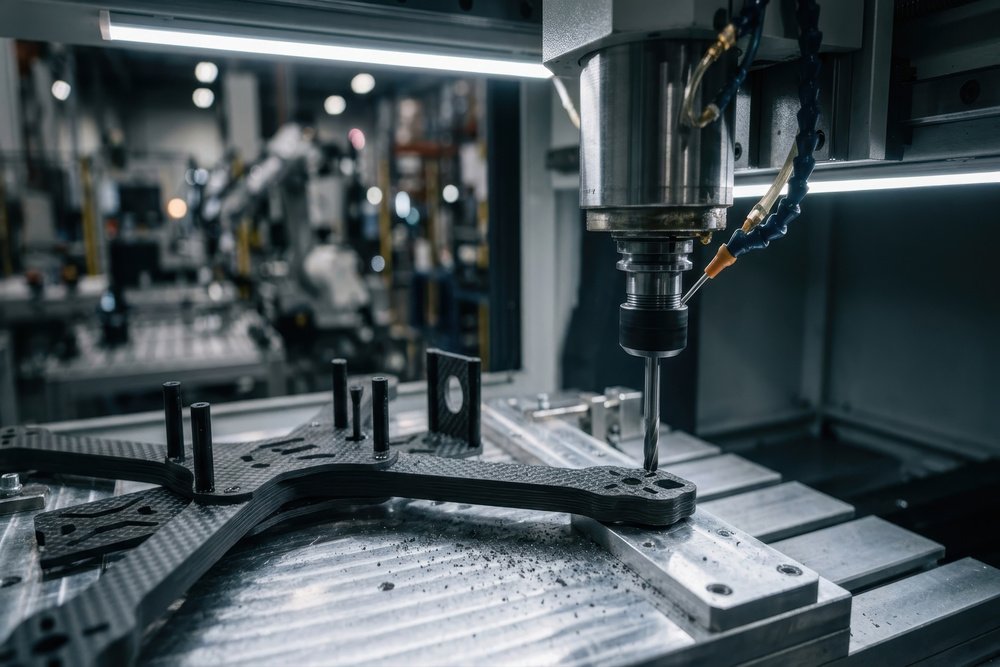
Due to its unique combination of strength, stiffness, and low weight, carbon fiber is widely used in fields such as aerospace, automotive, and the production of sporting goods. However, manufacturers commonly face the challenge of warping, in which a perfectly looking part warps once it is removed from the mold. Warping makes it impossible to achieve the desired accuracy and precision, which may cause the part to fail inspection and, in some cases, even makes it necessary to scrap the part. To avoid warping and improve product quality, manufacturers need to understand what causes this undesirable effect.
Reasons for Warping
One of the main reasons carbon fiber parts warp is residual stresses, which appear during the manufacturing process. The materials used to make the parts, namely, carbon fiber and resin, react differently to heat exposure. In the course of heating, the materials expand and contract differently. During the cooling process, the difference in reactions becomes the source of residual stresses. Removing the part from the mold releases stresses that may cause warping.
Another reason for warping can be improper layup. The strength of carbon fiber is determined by the orientation of the fiber. Therefore, layup greatly affects the behavior of the part. If the layup is uneven and asymmetrical, the part is likely to warp or bend once cured.
Uneven curing is another frequent cause of warping. When certain sections of the product heat unevenly, they cure at varying speeds, which generates stress and results in warping. This problem is common for thick products and products with a complicated design.
Role of the Mold
It is clear that one cause of warping is the variation in how materials react to heat. However, the mold is another element that affects whether the part warps. Metal molds such as those made of aluminum or steel expand faster than carbon fiber does. Properly designed carbon fiber composite tooling can provide a closer thermal-expansion match, helping reduce distortion associated with tool–part mismatch. Aerodine Composites is among the few companies that manufacture composite molds designed to reduce warping and improve the accuracy of their products.
How Manufacturers Can Prevent Warping
There are several measures that can help to reduce the risk of warping. First of all, the layup of the part should be balanced and symmetrical. For every ply on one side of the laminate, there should be a corresponding ply balanced on the opposite side. This approach helps the stresses to balance each other, making the part straight.
Second, it is necessary to pay much attention to the curing cycle management. Slow and even heating and cooling reduces the accumulation of stresses in the part. Carefully following the resin supplier’s instructions and checking the temperature in the component can significantly assist with this. Third, the appropriate mold material should be selected. As discussed above, the best choice is composite molding that expands and shrinks in almost the same way as the part.
Read More: How Advanced Servers Are Supporting the Expansion of AI
Finally, it is important to consider how and when the part should be removed from the mold. Removing the part before it is completely cooled makes it move and warp. Using fixtures is one of the ways to solve this problem.
Conclusion
Warping is the most common problem faced by the manufacturers of carbon fiber products. However, there are several actions that can help to prevent this problem and reduce the risks of its occurrence. Such actions include laying the part symmetrically, controlling the curing cycle, choosing the right mold material, and removing the part from the mold carefully.
Read More: Life Insurance: Understanding the Protection You May Need and How to Evaluate It
Related Posts

The Role of Research, Data, and Insight in Modern PR Campaigns